


Greetings, friends!
I was on a call last week with a family office based in Europe. Good people. They’d spent the better part of two decades compounding money at a remarkable rate...acquiring businesses, consolidating within their own sphere of competence, building something genuinely impressive.
Now they had a problem.
They’d run out of things to buy. Acquisition targets had dried up. And so there they were, sitting on more cash than they knew what to do with, trying to figure out what comes next.
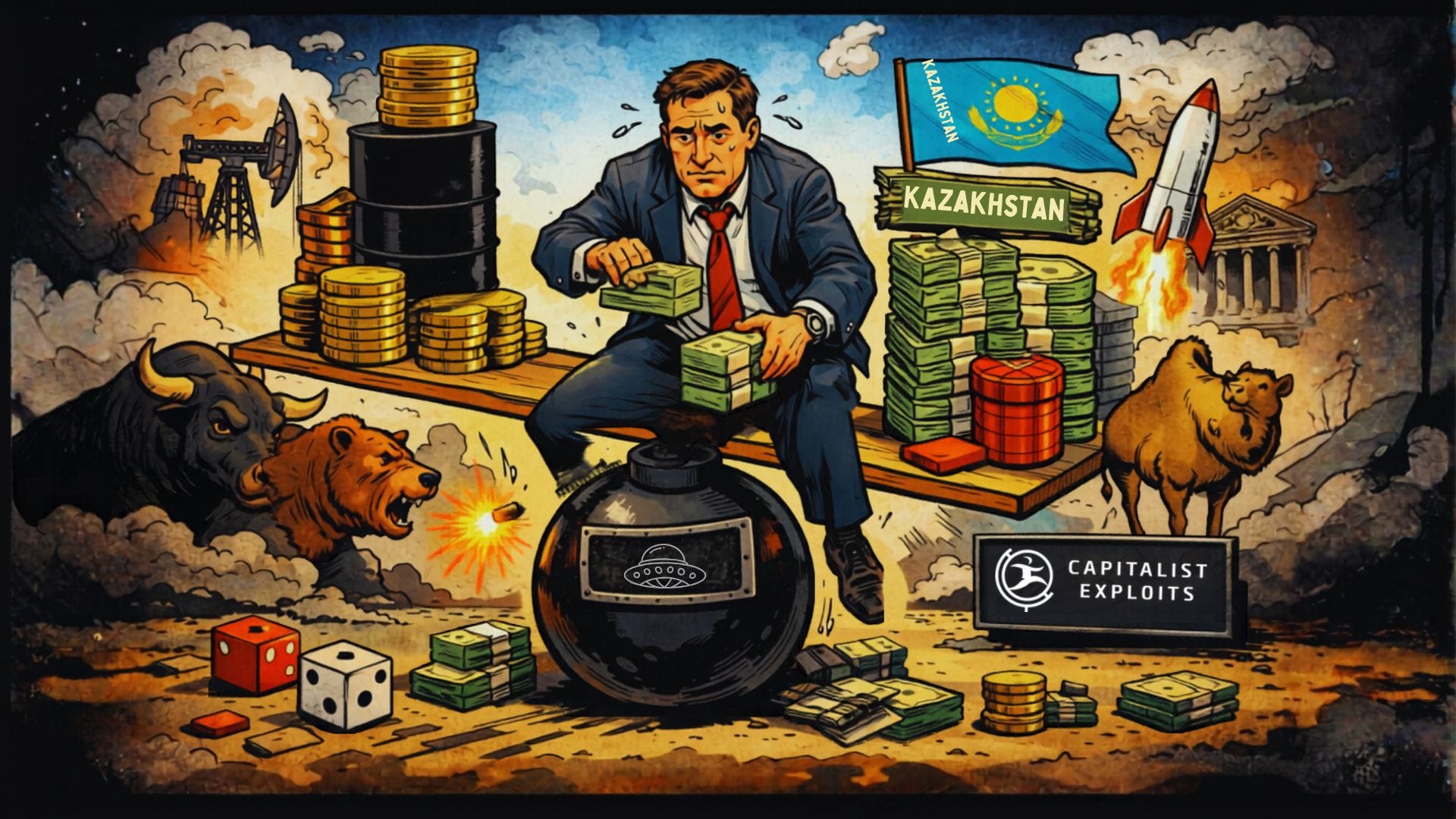
They’d been looking at a private deal in Kazakhstan. Decent business. Potentially interesting returns. But they got spooked...jurisdictional risk, legal uncertainty...and passed.
What struck me, getting off that call, was this: the very framework that built their wealth was now working against them. They were accustomed to deploying large chunks of capital into concentrated positions. That’s how you build a family business empire. You go big, or you don’t go. But that framework, applied to a portfolio of financial assets? That’s how you eventually blow yourself up.
We own Halyk Bank of Kazakhstan. Same jurisdiction. Same potential for legal and political unpleasantness. Are we worried? Not particularly. It’s a 1% position size. Paying somewhere around 15% in dividends. Has essentially returned its cost basis in distributions alone.
Could it get wiped out tomorrow? Absolutely. But the probability, going in, was in our favor. The valuation was already pricing in the jurisdictional risk. We were being paid to own it. And at 1% of the portfolio, a total wipeout is a rounding error.
That is the whole game, right there. Not picking the right name. Sizing the bet correctly.
I get asked constantly about the Fed. What are they going to do next? Will they cut? Will they hold? Is QE coming back?
My honest answer: I genuinely don’t care.
Not because it isn’t mildly interesting as trivia. It is. In the very short term, if you’re a trader working tight time horizons, fine...the Bank of Japan raising rates a quarter point can matter to your P&L this week. But as a structural determinant of where your wealth ends up in five or ten years? Completely meaningless. It does not change the trajectory.
And the trajectory is what matters.
When you have the financial constraints we have across the western world...debt loads now topping $251 trillion globally, the social contract eroding between governments and their populations, the geopolitical pressures that historically and reliably follow exactly that kind of breakdown...the destination is already set. You can’t know the precise sequence of events. You can’t know which particular headline moves markets on a given Tuesday. But you can judge the trend. And you can position accordingly.
Trying to trade around Fed meetings is intellectual junk food. It feels productive. It isn’t.
So what is the actual job?
It’s boring. People hate when I say that, but it’s the truth.
The job is portfolio management and position sizing. That’s it. That is the whole thing.
I could come out here and tell you there’s a gold company that’s going to go up 10x and you should put 20% of your wealth into it. That gets clicks. That gets attention. It also gets you wiped out eventually if you keep doing it...because you can have completely correct analysis and still get blindsided by something you couldn’t see. The analysis isn’t the problem. The sizing is.
What you want is multiple bets, all with probability in your favor, knowing full well that not all of them will work out. Then you size each one so that when something goes wrong...and something always goes wrong...it doesn’t matter.
Here’s what that actually looks like in practice. Within our Dividend Portfolio, we own north of 80 positions. Most sized at 1 to 1.5% each. On any given day, one of those is probably down 10% or more. Nobody on our team is losing sleep over it. Because it’s 1% of the portfolio. You barely notice it.
Compare that to lying awake at 3am because you’ve got 20% of your net worth in a single commodity stock that just tanked overnight. That’s when emotion takes hold. That’s when you make the decisions that cost you. Investing should not be an emotional experience. The moment it becomes one, you’ve already made a structural error...and the error wasn’t the stock pick, it was the position size.
There’s a related concept that I think is equally underappreciated: the difference between trimming and selling.
Most investors operate in binary terms. Either I hold, or I sell. Either I’m in, or I’m out.
That’s not portfolio management. That’s gambling with extra steps.
Continuous rebalancing is different. Say a particular theme has run hard and now represents a considerably larger slice of the portfolio than when we entered. That’s a good problem...but it’s still a problem, because the risk profile has shifted. The absolute dollar downside is now larger. And somewhere else in the world, there’s an asset sitting at the same kind of valuation we liked about this one eighteen months ago, with the same asymmetry...and nobody talking about it yet.
So we don’t sell. We trim. Take a position from 12% back to 6%. Redeploy into the next unloved opportunity...maybe Brazilian equities, as we’ve recently done, maybe offshore oil assets, maybe something currently residing in the zero fan club.
This is how wealth compounds over a decade. Not through finding the one great trade and white-knuckling it to zero or the moon. Through systematic, boring, emotionless rebalancing.
The family office in Europe had built something genuinely impressive. But the skill that got them there...concentrated capital, deep domain expertise, big swings within a narrow circle...was precisely the wrong framework for what came next.
The market doesn’t care what built your wealth. It only cares about what you do with it from here.
Stop watching the Fed. Start managing risk. Size your bets so that being wrong doesn’t kill you. Trim when something runs. Redeploy into what hasn’t moved yet.
Boring as a wheelbarrow.
That’s the whole strategy.
Sincerely,
Chris MacIntosh Founder & Editor In Chief, Capitalist Exploits Independent Investment Research
Excellent piece, and very relevant for the current times.