

![[Section Divider Image]](https://substackcdn.com/image/fetch/$s_!hsv9!,f_auto,q_auto:good,fl_progressive:steep/https%3A%2F%2Fsubstack-post-media.s3.amazonaws.com%2Fpublic%2Fimages%2F650448a9-fcee-402b-94c6-fd8b053fc85f_1320x50.webp "[Section Divider Image]")
As of the writing, Brent just had its worst week in a month. The tankers are hesitantly moving through Hormuz again, the peace memos are teetering, and the screens are bleeding red across the energy complex. And you can almost hear the exhale from every macro desk on Wall Street at once...thank god, the oil shock is over, the inflation scare with it, back to your regularly scheduled rate cuts.
I want you to hold onto that exhale, because it is one of the most expensive mistakes you will see priced into a market this year.
Here is the thing the relief rally is quietly assuming. It assumes that the inflation was the oil price. That the two are the same animal, that when crude rolls over the inflation rolls over with it, and that a falling pump price is the all-clear. It is a tidy story. It is also a category error, and a costly one, because it confuses the spark with the fire.
So let me ask the question I have put to every economist who has ever sat across from me and forecast deflation out of a war. And not one of them has ever answered it.
Show me a war that was deflationary.
The question nobody can answer
Go and look. Genuinely, go and look...I’ll wait.
You will not find one. Not the Napoleonic wars, not the American Civil War, not either of the two big ones in the twentieth century, not Korea, not Vietnam, not the Gulf. Every major conflict in recorded financial history runs the same way on the price level, which is to say up, and frequently up in a manner that does not politely reverse when the shooting stops.
The reason is not complicated, and it has nothing to do with the price of a barrel. It is this. Wars have to be paid for. Nobody finances a war out of the petty cash drawer. You run the deficit, you blow out the debt, and then...because the bond market will only swallow so much before it gags...you monetise it. You print, or you let the central bank do the printing on your behalf and call it something more respectable. That is the inflation. Not the missiles. The financing of the missiles.
And here is the part the relief rally is missing entirely. That financing has already happened. The deficits are already wider. The monetisation is already in train. None of that unwinds because a ceasefire holds and a tanker clears the strait. You cannot un-print money. The spark may have gone out. The fire is in the walls.
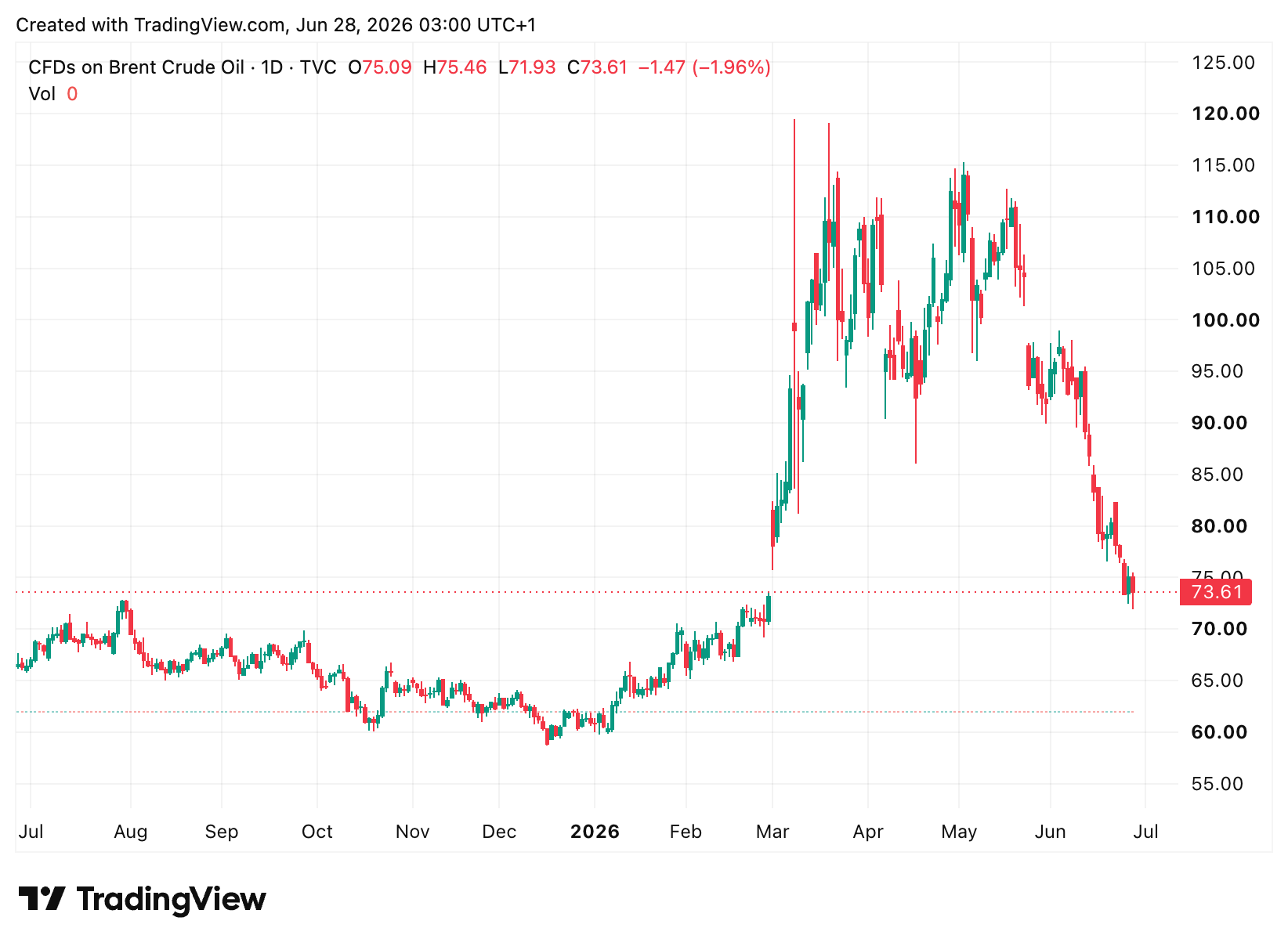
We have actually been here before, you and I, on this very page. A few weeks ago in Countdown to Shortages I showed you that oil had quietly split into two markets...a jumpy spot price whipsawing on every peace headline, and a forward curve that kept right on pricing the structural shortfall underneath, indifferent to the diplomacy. That piece was about the oil. This one is about something larger and slower-moving that sits behind the oil, and it is the thing that actually empties your wallet.
Because watch what the official numbers are doing while the crowd celebrates cheaper petrol.
The data is not cooperating with the relief rally
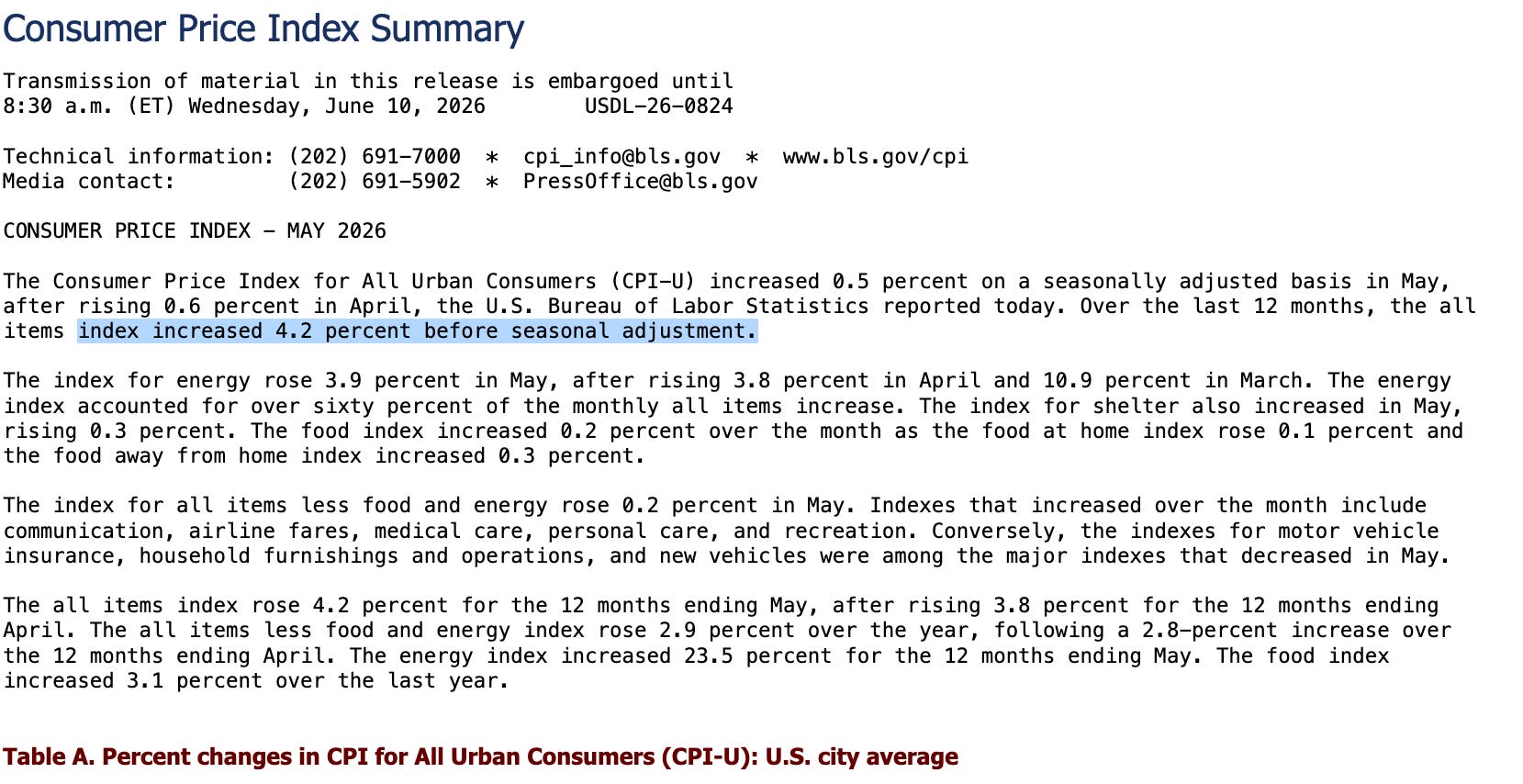
US consumer prices rose at 4.2% in the year to May. That is the highest reading in three years, and it is the third month in a row that the number has accelerated. Above four percent for the first time since 2023, climbing, not falling, in the very window everyone now wants to declare the inflation finished.
“Ah,” says the pointy-shoe brigade, “but that’s the energy spike, and energy is rolling over now, so May was the peak.” And they are half right, which is the most dangerous thing to be. Headline inflation may well have topped for the moment, because the gasoline line will drop as crude drops. Fine. I’ll grant them the headline.
But look one layer down, at the number the energy noise can’t explain away. Core inflation...stripping out food and energy entirely... rose to 2.9% in May, its highest since last September. The bit that is not the oil price is still climbing. Which is precisely what you would expect if the inflation were being driven by something other than a barrel of crude. Something like, oh, I don’t know, the financing of a war.
And the bond market, which is a great deal less sentimental than the equity desks, has noticed. The talk now is not of the rate cuts everyone penned in back in January. Traders have started pricing the Federal Reserve’s next move as a hike. A hike. Into a “peace rally.” Sit with that contradiction for a moment, because it is the whole article.
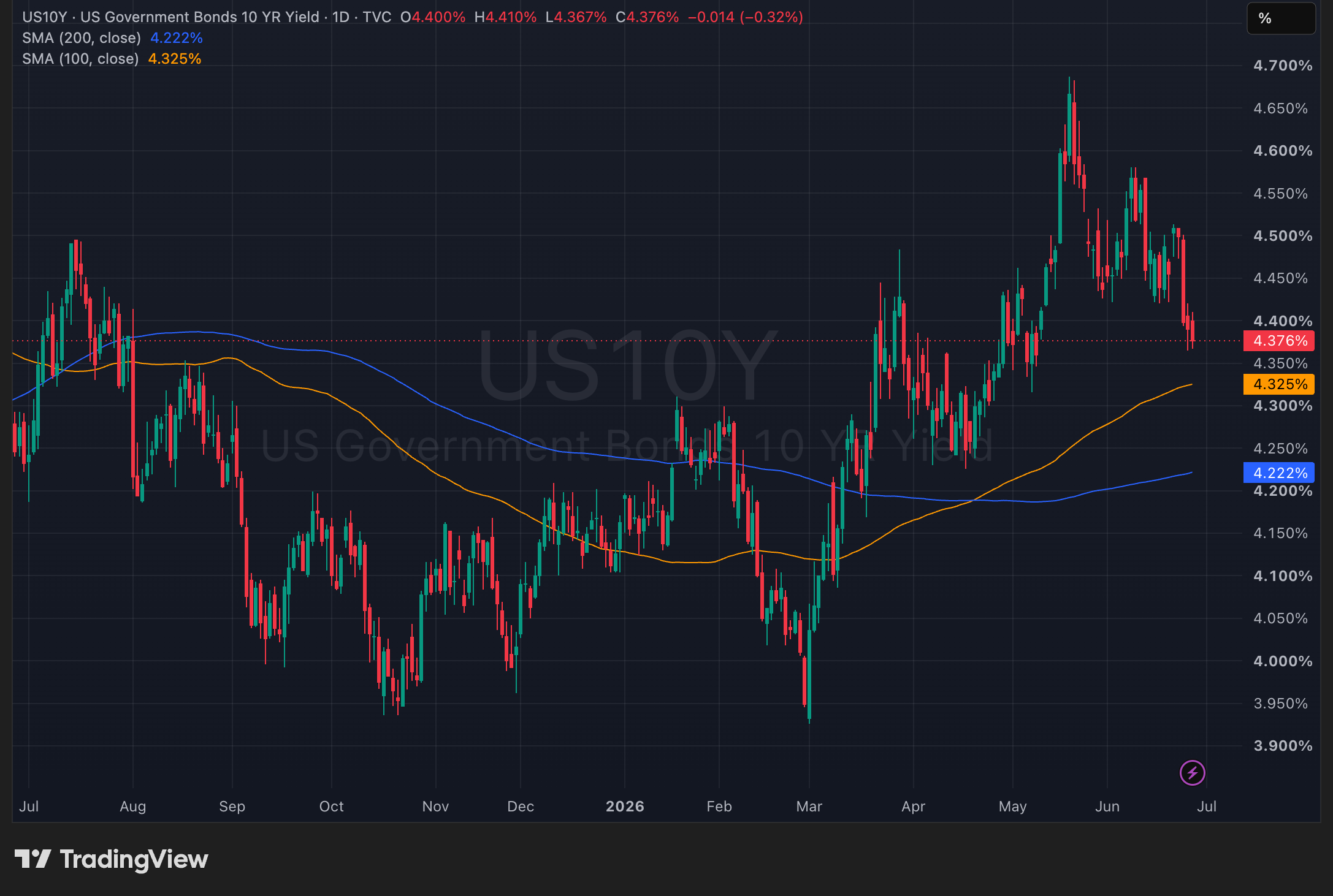
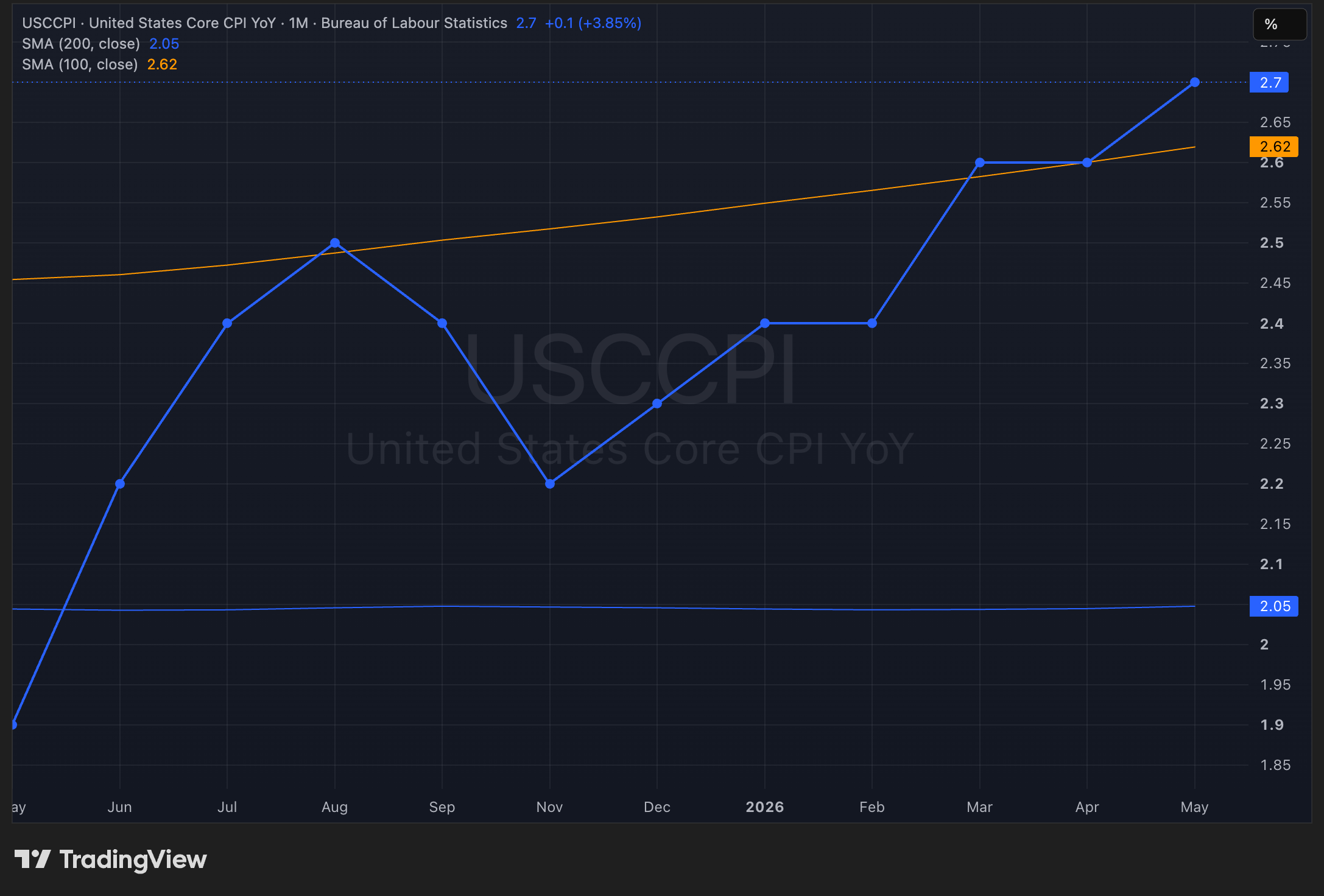
The screens say peace, cheap oil, all clear. The actual machinery...the deficits, the monetisation, the core number, the rate path...says something it would very much rather you didn’t hear yet.
So what happens next, and more to the point, what do you do about it?
Here is what waits on the other side of the paywall below. The three things a falling oil price will not fix, and why they keep the inflation alive long after the war is a memory. The historical case in full...what actually happened to prices in the decade after the big conflicts, not during them, because the “after” is the part that should frighten you. And the specific corner of the market we are positioned in for exactly this...the trade that wins not when oil spikes, but when the crowd realises the inflation was never about oil in the first place.
If you have read this far you already feel the shape of it. The rest of this one is for paid subscribers...the part where the argument stops being interesting and starts being actionable.
Upgrade to the Insider Newsletter Level to keep reading →

